
Seven Dollars at the Gate

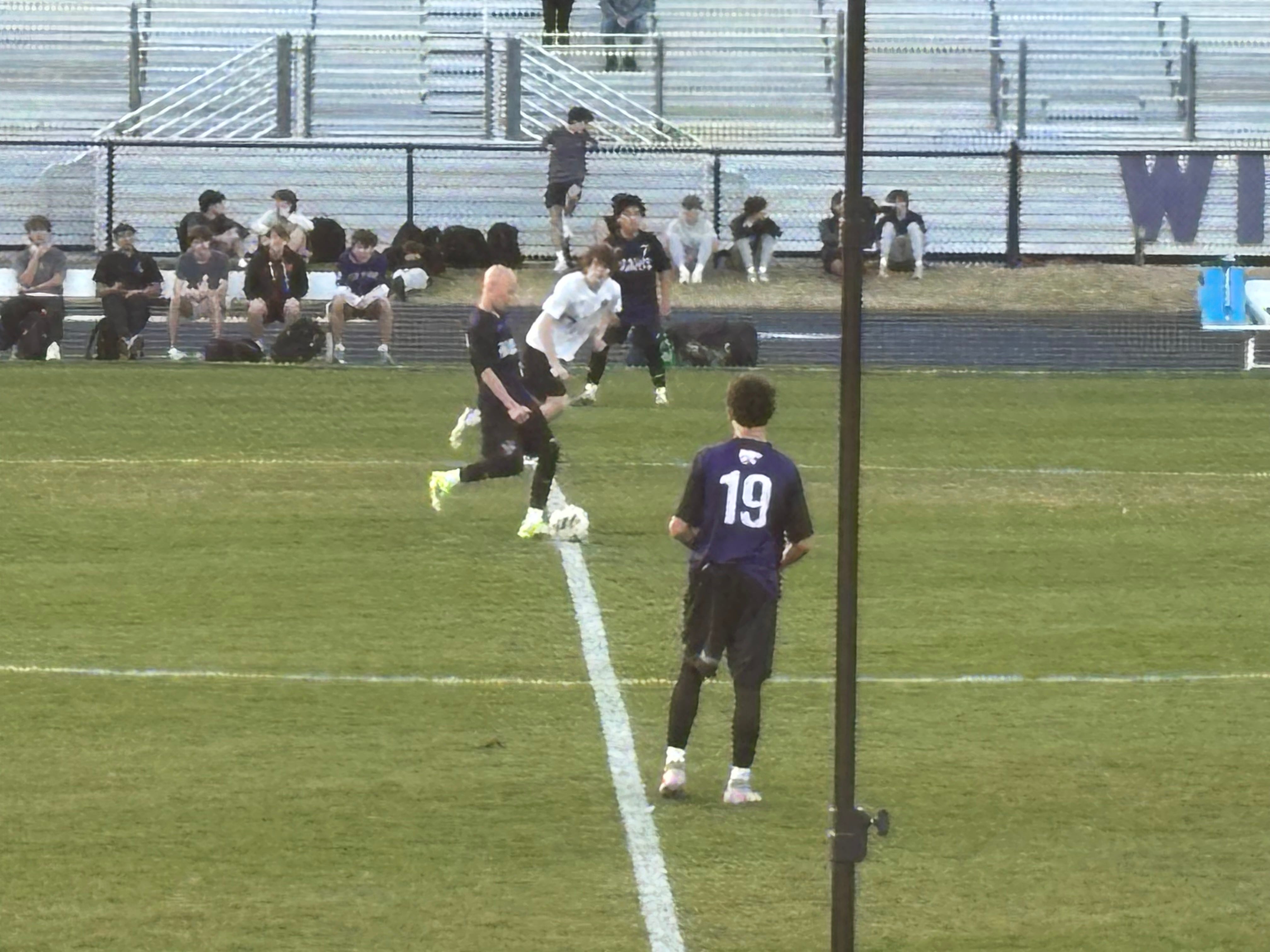
I paid seven dollars to watch my son play soccer. I hid at the side of the bleachers so the other parents would not see me. He played beautifully. This time I actually watched.
I want to tell you what that evening looked like because I think it is the clearest picture I have of what a federal prosecution costs in human terms, and I think the human terms are the ones that matter most and get discussed least. The legal terms are well documented. The financial terms are precise and a matter of public record. The human terms are harder to quantify, which is probably why they do not show up in sentencing guidelines, but they are the ones that find you in the quiet moments and stay.
Luke is fourteen, playing on the high school junior varsity soccer team, and has been told he will start on varsity next year. That is not a standard accomplishment for a kid in middle school. The coaches recognized what the travel scouts who have been watching him for years already knew, and because fourteen years of genuine ability developed through focused, consistent work produces results that are visible to anyone paying attention. He is that good. People who know soccer, people whose assessments carry weight, have told me this in terms that were specific and not polite. I have known it for years. I have watched him develop from a talented kid into a player who commands a field, and I have felt the particular pride that is available to a father watching his son become something real.
One of his first home games was in the early weeks of the high school season. I wanted to be there. That want was uncomplicated and entirely genuine. He is my son. He was playing soccer. I wanted to watch him play.
What was complicated was everything surrounding the want.
By that point, my name had been in local news stories connected to a federal prosecution. The legal community in Charleston is not large. The parent community at a suburban high school is not large either, and those two communities overlap in ways that a person in my position cannot pretend away. Showing up at a high school athletic event, walking through a gate, finding a seat in the bleachers among the other parents, and participating in the ordinary social texture of an evening at a soccer game, was not something I could do without calculation. The calculation was not theoretical. It was specific and physical, the kind that changes how you move through a space and what you are aware of at every moment inside it.
I sat in my car in the parking lot and watched the gate from a distance. There was a cluster of parents moving through the entrance the way families move through the entrance to a school sporting event, unhurried, talking to each other, catching up on the week, the ordinary warmth of a community gathering around its children on a Friday night. I watched the cluster and I waited. I was waiting for a break in the flow, a moment when the gate was briefly clear and no one was standing there who would have an unobstructed view of who was arriving. I was waiting for the window in which I could cross the parking lot and pay my admission without being seen by anyone who might recognize me and for whom my presence might become an occasion for conversation I did not want to create for my son.
The window came. I got out of my car and walked quickly to the gate. I paid seven dollars. The attendant took my money without particular interest or recognition. I was just a person paying to get in. I kept moving.
I did not go to the bleachers. I did not find a spot in the stands among the other parents, the way a father normally does, the way I had done at a hundred of his games over the years without giving it a second thought, without calculating anything, without needing to think about whether my presence was a liability to anyone. I walked to the side of the stands, to a position where the structure of the bleachers obscured me from the people sitting in them while still giving me a sightline to the field. I stood there alone and I watched my son play soccer.
He was good. He was genuinely, visibly good in the specific way that stands out even to people who are not watching carefully. The way he read the field before the ball arrived. The decisions he made under pressure. The combination of technical skill and positional intelligence that you cannot fully teach and that he has had since he was young enough that it was already obvious. He was the youngest player on the field that night and he played like he had been there before, like the moment was not bigger than he was.
I watched all of it. I watched it from the side of the bleachers, alone, obscured from the other parents, but I watched it. That distinction matters to me because there is a recent history of games I attended and did not watch, games where I was standing on the sideline with a phone in my hand trying to lock a DFS lineup before tip-off while my son was on the field doing something worth watching. The corner kick I missed. The goal I described to him on the drive home using the vocabulary of a father who had been watching, fabricated from the celebration I had observed after the fact, because the moment itself had happened while I was somewhere else. That history makes the watching matter in a way it would not matter if the watching had always been reliable.
This time I watched. All of it. From the side of the bleachers, alone, for seven dollars.
I want to sit with what I felt standing there because I think getting it right matters and I think the easy version of it, the version that says I felt shame and leaves it at that, is not quite accurate enough to be useful.
It was not shame exactly, though shame was present. It was something more specific than shame. It was the recognition of what I had made of being his father. I had made it into something that required me to stand at the edge of a high school soccer game and calculate how to arrive and depart without my presence becoming a disruption. I had made it into something that required concealment, not of the addiction or the fraud or the federal charges, those were already public, but of myself. Of the simple fact of my being there. I had taken the ordinary, unremarkable act of watching your son play a sport he is genuinely gifted at and turned it into something I had to manage.
That is a specific kind of cost. It is not the largest cost. It does not show up in a restitution order. It will not be mentioned in a sentencing memorandum. It is the cost of standing at the perimeter of your own son’s life and watching from outside it because you have done something that makes your presence at the center of it complicated, and the complication is entirely of your own making.
When the game ended, I walked directly back to my car. I did not pass through the congregation of parents making their way toward the parking lot. I waited in the car until Luke came out of the locker room with his gear and walked across the lot and got in. We drove home. I told him he had played well. He asked what I thought of a specific play in the second half. I told him exactly what I thought, in specific terms, because this time I had actually seen it.
He will keep playing. There will be more games. When I come back, I intend to watch them from the bleachers, with the other parents, in a seat I choose without calculation, without checking the gate first or timing my arrival for a moment when no one is watching. That version of showing up is what I am working toward and what I owe him. It is not the version that was available to me that Friday evening. The version available to me that Friday evening was seven dollars and a spot at the side of the bleachers where nobody could see me, and I took it, because it was what I had. I paid seven dollars to watch my son play soccer, and he played beautifully.
I was there. Not in the way a father is supposed to be there, not in the center of it with the other parents and the ordinary Friday evening warmth of a community gathered around its children. I was there at the edge of it, standing alone, watching from outside the thing I should have been fully inside.
That is what the specific, human cost of a federal prosecution looks like when it arrives in the life of a family. Not a legal filing. Not a headline. Rather, it looks like a father in a parking lot timing his approach to the gate, paying seven dollars, standing at the side of the bleachers so his presence does not become a problem for his son, and watching a boy who deserved better than the circumstances his father created play a game he loves with a skill that has nothing to do with any of it.
He played beautifully. I intend to be in the bleachers when he does it again.
I write here every week. I write about addiction and the federal justice system and fatherhood and what it looks like to try to rebuild something honest after losing nearly everything. I write it in real time, without the benefit of hindsight or a safe distance from the consequences, because I think that is the version that is most useful to the people who need it most.
If you are fighting something privately, or loving someone who is, or simply trying to understand what this looks like from the inside, subscribe below. When I go inside, I intend to keep writing. You will hear from me.
I really love your honesty and your vulnerability. I agree that people don't often think of the human cost that goes with federal prosecution. I agree with Michael's comments below. "Almost any bad situation can be harnessed for growth." You seem to have a unique ability to look at the situation in a way that few in your shoes does and I have a strong feeling that your story is only just beginning.
Great post. I guess you still don't know what the next years will hold for you - but by the time this era has passed and you're in "what's next?" mode, gambling is going to be a massive problem with kids, the way it's being marketed. There's probably a really fulfilling career waiting for you, and if you end up with a lot of time on your hands in the interim, sounds like your brain's gonna put it to good use. I feel like - other than outliving our children - almost any bad situation can be harnessed for growth. Years go by and you're like "that sucked, but I learned a lot" - I think a key is being cognizant of what those things might be when the shit's going down and lean towards them - sounds like you get that! (Also, my PhD, Jungian, Yoga teachin' wife is like "my god, that guy's a fantastic writer!").